
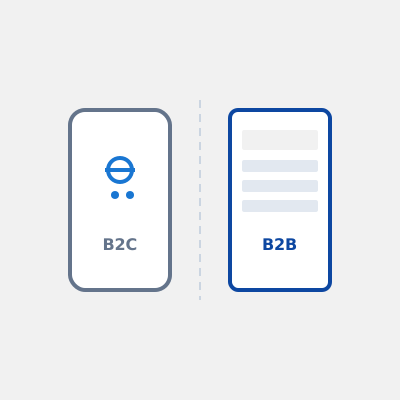
At first glance, B2B e-commerce and B2C e-commerce seem very similar. Both involve browsing products, adding items to a shopping cart, and checking out online.
However, beneath the surface, the requirements of business buyers are vastly different from those of retail consumers.
While B2C is built for transaction speed, B2B is built for relationship depth, scale, and compliance. At the center of this B2B e-commerce architecture is the PunchOut Catalog.
Let’s look at the key differences between B2B and B2C e-commerce and explore why PunchOut catalogs are vital for corporate sales.
B2B vs. B2C E-commerce: A Comparison
| Feature | B2C E-commerce | B2B E-commerce |
|---|---|---|
| Target Audience | Individual Consumers | Business Buyers / Procurement Teams |
| Pricing Model | Unified Public Pricing | Custom, Contract-Negotiated Pricing |
| Decision Maker | Single Person (Self) | Multiple Approvers (Procurement Chain) |
| Payment Method | Credit Card, PayPal, COD | Purchase Orders (PO), Net 30/60 Terms |
| Order Sizes | Small (1-5 items) | Bulk (Pallets, hundreds of items) |
| Compliance | Minimal (Standard retail terms) | Strict (Corporate policies, spend audits) |
Why B2C Storefronts Fail B2B Buyers
A B2C e-commerce storefront is designed to collect payment immediately. If a supplier tries to sell to an enterprise buyer using a standard B2C storefront, several points of friction emerge:
- Lack of Contract Pricing: Standard stores display one public price. B2B buyers have negotiated discounts. Showing them the retail price violates contract agreements.
- Payment Obstacles: Procurement managers cannot use personal credit cards to buy $50,000 of raw materials. They need to issue a Purchase Order.
- Manual Data Transcription: If a buyer shops on a standard storefront, they must print the shopping cart screen and manually key the items into their internal ERP to request approval. This manual step wastes hours.
- Compliance Risks: Without system-to-system connections, employees can buy non-approved items, creating spend leakage.
The Role of PunchOut Catalogs in B2B E-commerce
PunchOut catalogs act as the perfect bridge, adapting web storefronts to the rigorous workflow requirements of B2B procurement:
1. Contract Price Assurance
When a user launches a PunchOut catalog, the integration identifies their company and loads their specific product selection and discounted contract pricing. The pricing is guaranteed to match the contract terms.
2. Streamlined Approvals
Instead of checking out, the PunchOut catalog transfers the cart back to the buyer’s e-procurement platform. This automatically generates a purchase requisition inside their company ERP, routing it through their internal approval chain.
3. ERP and Catalog Integration
PunchOut catalogs sync with the buyer’s ERP (Ariba, Coupa, Oracle, etc.), which means they do not have to maintain static catalog databases on their own servers. The supplier manages the product data, while the buyer’s system processes the order.
4. B2B Procurement Workflows
PunchOut catalogs support critical B2B metadata, such as UNSPSC codes (for spend category tracking) and standard Units of Measure (UOMs), ensuring the cart data validates seamlessly in corporate systems.
Transitioning Your Store to B2B PunchOut
To win large enterprise contracts, suppliers must adapt their e-commerce storefronts to B2B capabilities.
At QuickPunchOut, we help you turn your Shopify, WooCommerce, Magento, or custom website into a fully integrated B2B PunchOut store. We handle the session authentication, cXML/OCI message routing, and pricing database lookups, making your store compatible with any enterprise buyer ERP.
Upgrade your e-commerce capabilities. See what PunchOut for an e-commerce team involves.