
For many B2B suppliers, winning a contract is a cause for celebration. But as order volumes grow, a hidden bottleneck emerges: manual order entry.
Every day, sales and administrative teams spend hours copying and pasting order details from emailed PDFs, Excel sheets, or buyer portals into their own Order Management Systems (OMS) or ERP.
This manual process is not just slow—it’s expensive and prone to human errors. The solution? Purchase Order (PO) Automation.
Let’s explore how PO automation works, its benefits, and how you can implement it.
The Problem with Manual Order Processing
When an enterprise buyer approves a purchase, their e-procurement system generates a Purchase Order. Historically, this PO was emailed as a PDF.
Here is why relying on manual processing of these PDFs is a liability:
- Human Errors: Typographical errors during data entry lead to shipping the wrong SKUs, incorrect quantities, or using outdated pricing.
- Fulfillment Delays: Orders sit in email inboxes waiting for manual entry, increasing your lead times.
- Labor Costs: Employing staff to manually transcribe data is an inefficient use of resources that could be directed toward high-value tasks.
- Scale Bottleneck: If you win 100 new orders a day, you have to hire more data entry staff. Manual entry does not scale.
What is PO Automation?
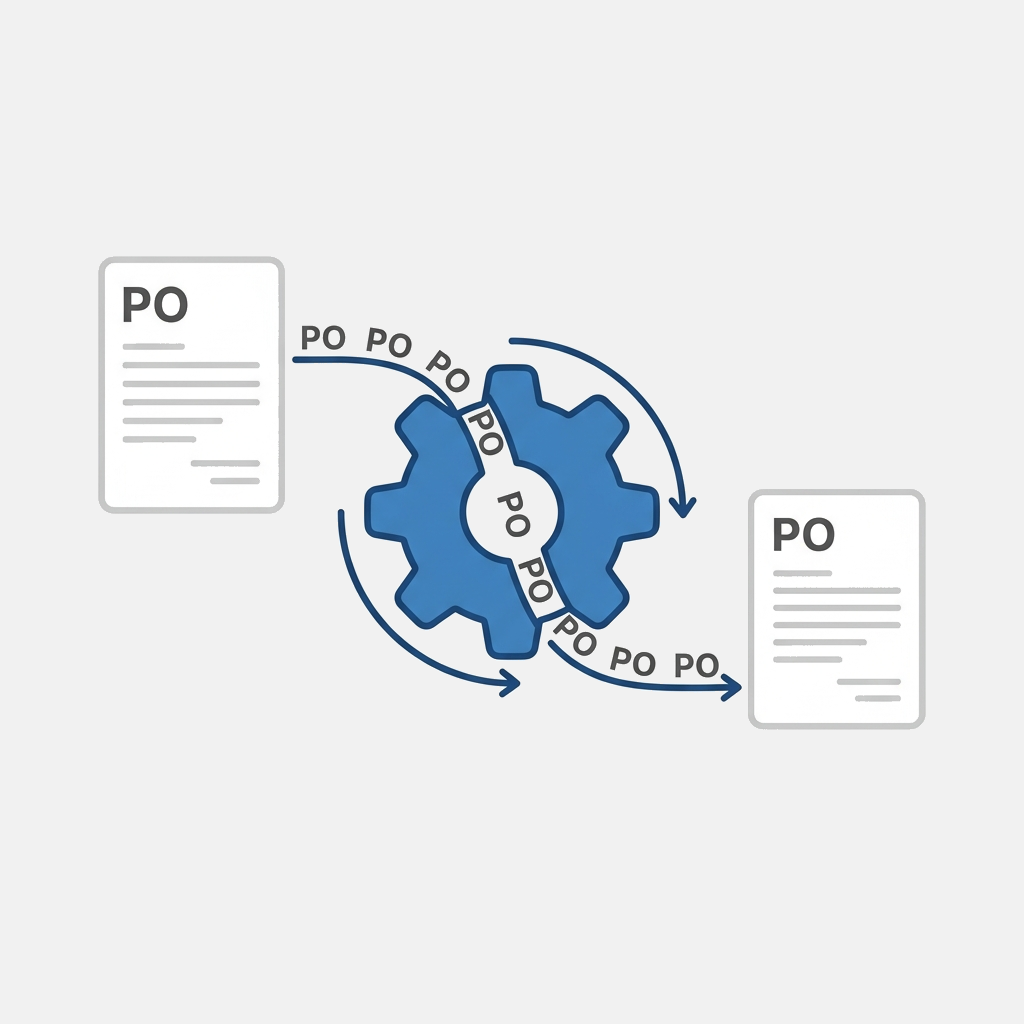
PO Automation is the process of receiving Purchase Orders electronically from a buyer’s ERP and ingesting them directly into your ERP or Order Management System without any human intervention.
Instead of sending a PDF, the buyer’s procurement platform generates a structured file (usually a cXML OrderRequest or an EDI 850 document) and sends it via HTTP or AS2 directly to your server.
Your system receives the file, parses it, validates the items and prices against your database, and automatically creates a new sales order in your system.
How PO Automation Works (The Flow)
- Generation: The buyer approves the purchase, and their system generates a cXML
OrderRequest. - Transmission: The cXML is sent securely to the supplier’s integration gateway.
- Ingestion: The gateway translates the cXML document and injects it into the supplier’s ERP (e.g., SAP, NetSuite, QuickBooks, or custom systems).
- Validation: The system automatically checks that the prices match the contract terms and that the items are in stock.
- Confirmation: The supplier’s system sends an automated order confirmation back to the buyer’s ERP.
Core Benefits of Automating Purchase Orders
1. Near-Instant Processing
Orders are received and entered in seconds, not hours. This enables faster picking, packing, and shipping, which directly improves customer satisfaction.
2. 100% Data Accuracy
Because there is no manual data entry, there are no transcription errors. The exact SKUs, quantities, and delivery instructions requested by the buyer are passed directly to your warehouse.
3. Lower Operational Costs
Automating the order ingestion flow drastically reduces the cost per order processed. Your existing staff can handle a 10x increase in order volume without needing to hire additional administrative help.
4. Seamless ERP Synchronization
Your inventory counts, pricing databases, and financial ledger remain perfectly synchronized in real time.
How to Get Started with PO Automation
To automate PO receipt, you need a system capable of accepting and parsing electronic documents like cXML and EDI.
At QuickPunchOut, we provide lightweight, secure middleware that intercepts incoming cXML and EDI Purchase Orders, translates them into the format your specific order management system expects, and loads them automatically. Whether you use NetSuite, SAP, Salesforce, Shopify, or QuickBooks, we make PO automation simple.
Stop copying and pasting. Send us your buyer’s PO requirement.